Invited Speakers
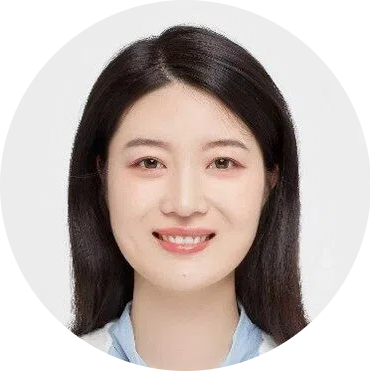 Prof. Chengyuan Jia
Zhejiang University, China
Bio: Chengyuan Jia, Ph.D., is a ZJU100 Young Professor at the College of Education, Zhejiang University. Her research focuses on the application of artificial intelligence and emerging technologies in language learning and academic writing. Her recent work examines generative-AI-assisted writing, human–AI interaction, learner engagement, and the responsible integration of AI into education, using learning analytics and process-oriented methods to understand how learners interact with, evaluate, and use AI-generated support.
Speech Title: Comparing Translanguaging and Prompt Engineering Pedagogies in GenAI-Assisted EFL Academic Writing: A Randomized Controlled Trial
Abstract: The effectiveness of generative artificial intelligence (GenAI) in EFL academic writing depends not only on technological affordances but also on the pedagogical design guiding learners’ engagement. This randomized controlled trial compared translanguaging, which encourages learners to use their full linguistic repertoires, with prompt engineering, which develops their ability to formulate effective English prompts. Thirty-four EFL university students were randomly assigned to a translanguaging group (n = 14) or a prompt engineering group (n = 20). Both groups completed a guided research-paper writing task using the same GenAI system. Final writing performance was evaluated with an analytic rubric, writing speed and fluency through screen recordings, and post-task writing anxiety with a self-report questionnaire. No significant between-group difference was found in final writing performance, suggesting outcome-level equivalence. However, the translanguaging group wrote significantly faster and more fluently and reported significantly lower writing anxiety than the prompt engineering group. These findings indicate that comparable written outcomes may be achieved through different processual and affective pathways. Translanguaging may facilitate smoother, less anxiety-provoking writing by legitimizing learners’ full linguistic resources, whereas prompt engineering may strengthen strategic human–AI interaction and AI literacy. The two approaches may therefore serve as complementary pedagogies selected according to instructional priorities and learner needs.
 Prof. Yanli Liu
Tianjin University, China
Bio: Yanli Liu is a tenure professor of School of Electrical and Information Engineering, Vice Dean of the Tianjin International Engineering Institute, Tianjin University. She also serves as the Executive Deputy Director of the National International Science and Technology Cooperation Base for Distributed Smart Grids, the Director of the Joint International Laboratory for Big Data Analytics for Smart Energy System, and vice chair of IEEE PES Working Group on Application of Big Data Analytics on Transmission System Dynamic Security Assessment. She has made breakthroughs in key technologies in the interdisciplinary field of "AI+ Smart Grid" and cyber physical system, and She has presided over more than 20 projects and has published more than 60 papers, including the cover paper of the top journal Engineering, and has been selected for National Talent, and has been awarded the IEEE PES China Outstanding Women Engineer Award, IEEE PES China Distinguished Educator Award.
Speech Title: Physic-Informed AI in Enhanced Situational Awareness of Smart Grid
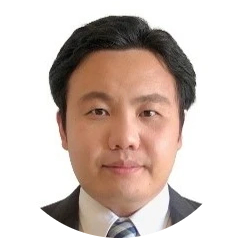 Assoc. Prof. Bin Zhang
Kanagawa University, Japan
Bio: Bin Zhang received his B. Eng. Degree in department of Automation from Harbin Engineering University, China, in 2011, and Ph.D. (Eng.) degree in department of Mechanical Intelligent Engineering from The University of Electro-Communications, Japan, in 2017. Then he worked at Nissan Motors Co., Ltd for developing Infiniti series. Since 2018, he joined Kanagawa University as an assistant professor, and he is currently an associate professor and PI of Intelligent Machine Lab at the department of Mechanical Engineering, Kanagawa University. His current research interests include intelligent robotics, human interaction, and autonomous vehicles. Dr. Bin Zhang is a member of IEEE, IEEJ and JSME. He has published more than 180 papers in referred journal publications and conference proceedings. He was awarded the best paper/best presentation awards for ICSR2016, ICDSP2022, EAI 6GN2023, RCAE2025 etc.
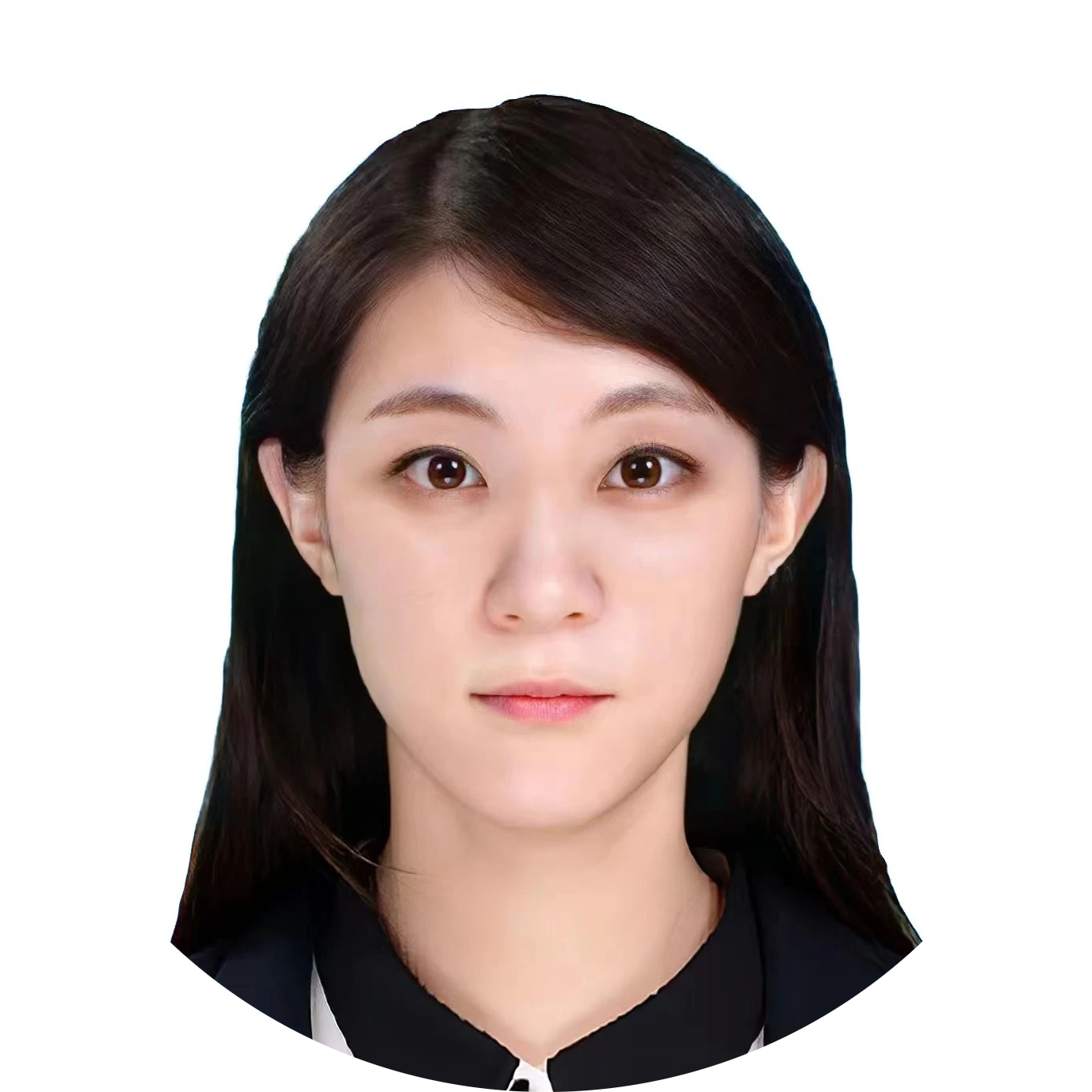 Assoc. Prof. Ye Yuan
Shenyang University of Technology, China
Bio: YUAN Ye currently serves as an Associate Professor in the Software College of Shenyang University of Technology in China. She received her B.E. degree and Master's degree from the Zhejiang University, China, and the University of New South Wales, Australia, in 2010 and 2012, respectively. She obtained her Ph.D. from the Northeastern University, China, in 2022, and had academic exchanges at the Ritsumeikan University, Japan, during 2014-2016. Her primary research interests lie in the fields of computer vision, computer graphics and image processing. Her research works are particularly focused on image segmentation, object detection, 3D reconstruction, and super-resolution. She has authored one academic monograph and contributed numerous papers to international journals and conferences, some of which have been published in IEEE Transactions on Image Processing, IEEE Transactions on Geoscience and Remote Sensing, Pattern Recognition.
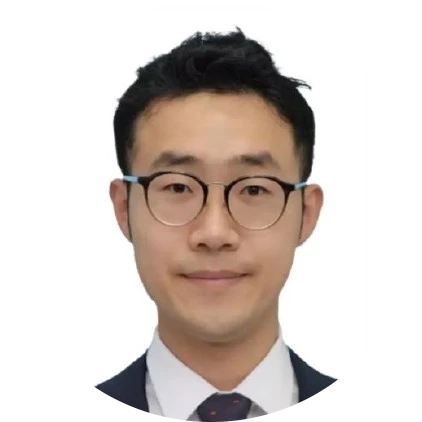 Lecturer Jiaqing Liu
Ritsumeikan University, Japan
Bio: Jiaqing Liu received his B.E. degree from Northeastern University, China, in 2016, and his M.E. and D.E. degrees from Ritsumeikan University, Japan, in 2018 and 2021, respectively. From 2020 to 2021, he was a JSPS Research Fellow for Young Scientists. From 2021 to 2022, he served as a Specially Appointed Assistant Professor at the Institute of Scientific and Industrial Research (ISIR), Osaka University, Japan. He subsequently joined Ritsumeikan University, where he is currently a Lecturer in the College of Information Science and Engineering. His research interests include multimodal artificial intelligence, computer vision, affective computing, medical and healthcare AI, and human behavior analysis. His research focuses on integrating visual, audio, textual, and physiological information to understand human states and behaviors and to develop AI-based technologies for healthcare applications.